Check the Standards Before You Choose an Office Chair
This page contains Coupang Partners affiliate links; the operator may earn a commission.
Key Takeaway
Look first in the spec sheet for a seat height adjustable within 35 to 45 cm and a backrest that supports you from the lower back to the shoulders with adjustable height and angle.
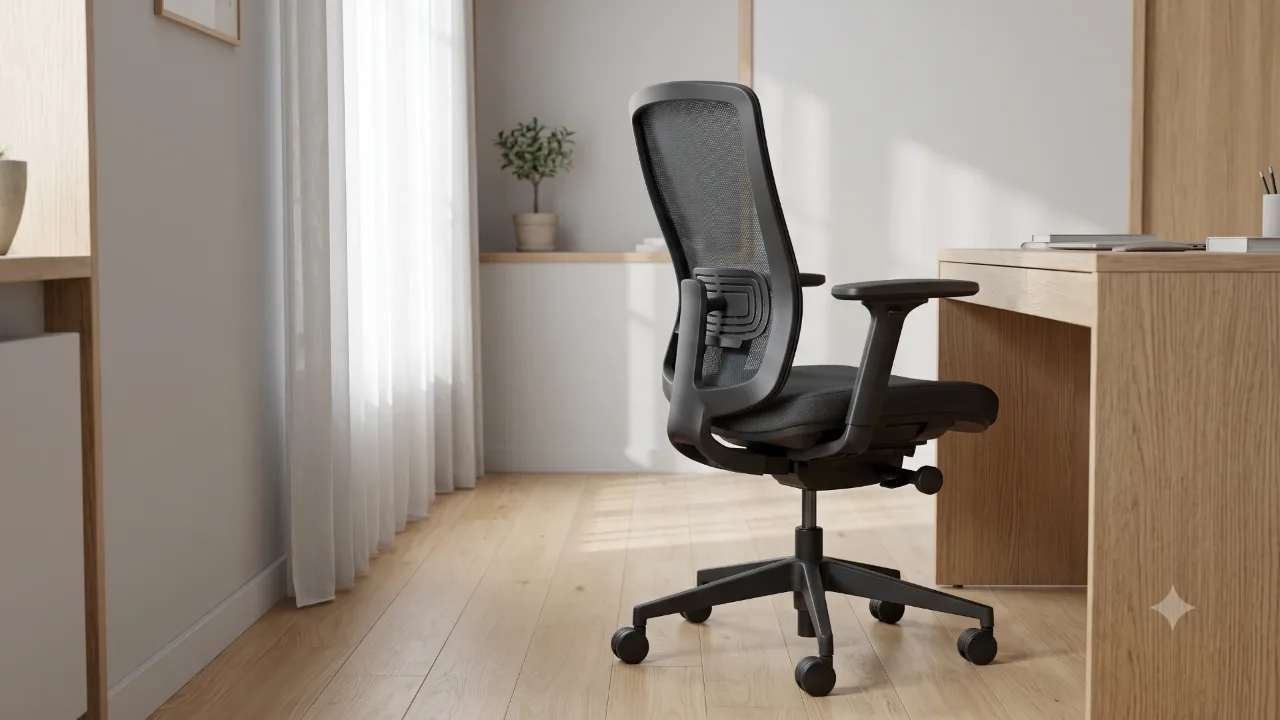
Those are the chair conditions in the Ministry of Employment and Labor's VDT work management guideline.
This notice sets out the duties of employers who must provide work equipment such as chairs to their workers, so it isn't a rule you have to follow when choosing a chair for home. Because it's an official source that gives dimensions as numbers, you can use it as a yardstick when you check the numbers on a spec sheet.
How far should the seat height adjust?
Article 5(4) of the guideline says the height from the floor to the seat should be adjustable at least within 35 to 45 cm. The condition is meant to let you adjust the positions of your eyes and fingers appropriately. The chair should be stable, move and rotate freely, and be built so that it doesn't slip.
What should you look at in the backrest and armrests?
The backrest should be wide enough, support you comfortably from the lower back to the shoulders according to the user's build, and have adjustable height and angle. The guideline also says armrests should be usable when needed.
What are the standards for seat depth and width?
The guideline sets the depth from the front edge of the chair to the backrest at 38 to 42 cm and the width of the seat at 40 to 45 cm. A spec sheet may list the same items under different names, so compare the labels.
The depth standard is meant to let your back rest against the backrest when you sit (Article 5(4), item 5). Item 6 of the same paragraph says the seat should have a material and structure that keeps your hips from sliding forward. If the spec sheet lists the seat material or cushion structure, read it against this condition.
| Item | Guideline standard | Spec sheet label |
|---|---|---|
| Seat height | Adjustable within 35 to 45 cm | Height adjustment range |
| Depth (chair front edge to backrest) | 38 to 42 cm | Seat depth |
| Seat width | 40 to 45 cm | Seat width |
| Backrest | Supports lower back to shoulders; height and angle adjustable | Backrest adjustment |
| Armrests | Usable when needed | Armrests present or absent, adjustment |
What do the KS standards cover?
Two KS standards related to chairs are published in the Korea National Standards Certification Integrated Information System.
- KS G 4215 "Office chairs": established 2009-11-05, with a last revision confirmation date of 2021-10-18. It is the standard for office chairs.
- KS G ISO 7174-1 (Stability test methods for chairs, Part 1: upright chairs and stools): established 2002-09-27, with a last revision confirmation date of 2022-08-25. It specifies the stability test method for upright chairs and chairs without backrests (stools).
The system publishes only the standard name, scope, and revision dates, so I haven't copied any pass-fail values. Check KS conformity on the product marking and the spec sheet.
How should you set your seated posture?
Article 6 says to sit well back in the chair so the backrest fully supports your back. Keep the inside angle at your elbows at 90 degrees or more, and keep your forearms and the backs of your hands level. Also check that the seat depth and height adjustment range fall within the standards above.
Knee angle and footrest standards are covered in the desk height and footrest article.
What should you readjust after you bring it home?
Article 11(1) says to inspect and adjust equipment, including the chair and work surface, before you start work or during breaks. If the person sitting changes or you've moved the desk, readjust the seat height and backrest angle first. Paragraph 2 adds that you should clean the workplace and equipment regularly or from time to time to keep them clean.
What should you check before you order?
Find each of the items below in the spec sheet and compare them one by one.
- Seat height: whether it says it adjusts within 35 to 45 cm
- Seat depth and width: whether they are within the guideline's 38 to 42 cm and 40 to 45 cm
- Backrest: whether it supports you from the lower back to the shoulders and has adjustable height and angle
- Armrests: whether you can use them when needed
- Structure: whether it is stable and doesn't slip
- KS conformity: check it on the product marking, not the spec sheet.
Product information
Candidates compared
-
Sidiz T50 2nd Generation
-
Sidiz GX
Check price and stock at the link. Product information is as of the date checked.
Frequently Asked Questions
What chair height should I set in cm?
The guideline calls for a chair whose seat height from the floor can be adjusted within 35 to 45 cm. Within that range, adjust it to the user so that the positions of the eyes and fingers are suitable.
If a chair has the KS mark, does it also meet the guideline's conditions?
They aren't the same standard. KS is a standard for chairs, while the dimensions in the VDT guideline are a separate standard, so check the guideline's dimensions separately in the spec sheet.
Sources & Verification Date
- Work Management Guideline for Workers Handling Video Display Terminals (VDT) (Ministry of Employment and Labor Notice No. 2020-17, Korean Law Information Center) · Verified
- KS G 4215 Office chairs (Korea National Standards Certification Integrated Information System) · Verified
- KS G ISO 7174-1 Stability test methods for upright chairs (Korea National Standards Certification Integrated Information System) · Verified
All materials have been verified from official announcements and may have changed since verification.