Reduce Winter Window Condensation: Check Ventilation and Insulation
This page contains Coupang Partners affiliate links; the operator may earn a commission.
Key Takeaway
When water droplets form on a window in winter, check both ventilation to let moisture out and insulation to reduce cold surfaces.
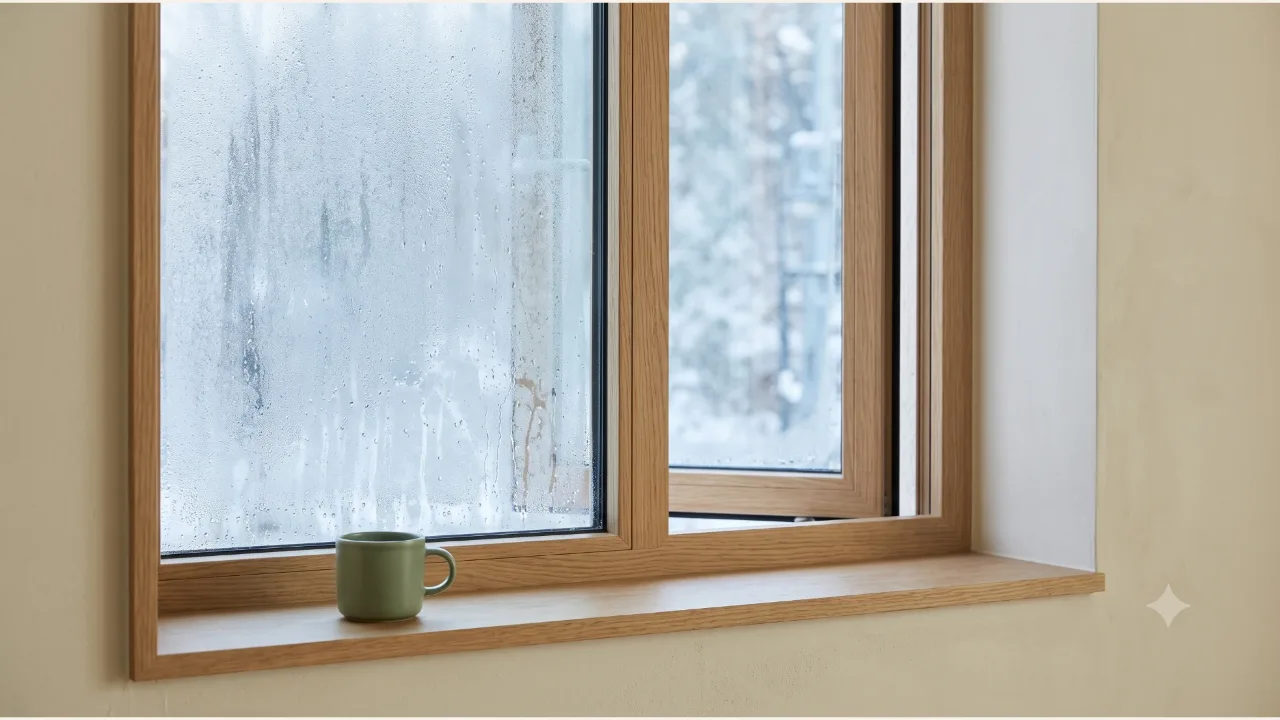
The Korea Energy Agency separates the two in its tips on managing condensation and saving heating energy. Don't stop at leaving the window open for a long time or at sticking on insulation products alone.
Indoor humidity itself is covered in the winter indoor humidity article. This one separates window ventilation from insulation and doesn't cover how to wipe off the water.
What do ventilation and insulation each change?
Ventilation is a way to get moisture inside the room out. Insulation reduces situations where indoor surfaces get too cold. The agency also advises installing insulation and a vapor barrier in walls and floors so surface temperature doesn't fall below the dew point.
So when you look at window condensation, check whether you ventilate and the state of the insulation separately. Don't treat products stuck on the glass and insulation work on the building's walls and floor as the same measure.
How do you open the windows to ventilate?
The agency suggests opening windows in the home where possible to let air through, but ventilating briefly and often. It also includes a tip to turn the heating down during ventilation.
The material warns against leaving windows open too long so that the room temperature drops. Don't read the practice of cracking a window open and leaving it that way all day as the same as this advice. After you finish ventilating, close the window and check the heating.
Which parts around the window should you distinguish?
| Part to look at | Role distinguished in the official guidance |
|---|---|
| Time with windows open for air to flow | Ventilation to let indoor moisture out |
| Window glass surface | Reducing heat loss with bubble wrap and curtains |
| Gaps in the window | Reducing heat loss through gaps with weatherstripping |
| Walls and floor | Managing surface temperature through insulation and a vapor barrier |
This is based on the Korea Energy Agency's published tips, checked on 2026-10-08. The page doesn't state a publication year, so I've given the check date. The items above are measures with different purposes, not a comparison table that guarantees the same performance.
How do you look at blocking the window and ventilation together?
Managing the window surface or gaps to reduce heat loss and opening the window when needed to let moisture out are things you check separately. Even after you attach insulation products, check that you can still open and close the window to ventilate.
The agency's material has no figures comparing how much individual bubble wrap or weatherstripping products reduce condensation. Don't expect the same result in every home.
How do you choose a thermo-hygrometer to record changes in indoor humidity?
A thermo-hygrometer is a tool for recording indoor air conditions before and after ventilation. It doesn't measure the surface temperature of a window or the moisture inside a wall, and one reading can't tell you the cause of condensation.
| Candidate | Temperature range | Humidity range | Size | Features to check |
|---|---|---|---|---|
| CAS T004 White | 0-50 °C | 20-95% RH | 120 x 85 x 20 mm | Tabletop or wall-mounted, 2 AAA batteries |
| CAS T030 White | 0-50 °C | 20-95% RH | 70 x 70 x 25 mm | Max/min temperature and humidity display, white backlight, 2 AAA batteries |
The CAS T004 official specs and T030 official specs, checked on 2026-10-08. A measurement range doesn't mean accuracy or condensation prevention performance. Check prices and what's in the box through the links, as of the check date.
If you want to leave it on a tabletop or wall and see the current value, look at the T004's size and mounting options. If you'll put it on a narrow shelf and also want the max and min values, look at the T030's size and display features. If you need to measure window surface temperature or diagnose a leak, neither device is the right candidate for that.
What should you write down when you finish checking?
When you finish checking, jot down the four items below. Next time droplets form, you can compare what you changed.
- How you ventilate now
- Which part you're trying to manage, the window glass surface or the gaps in the window
- Whether you've kept wall and floor insulation separate from window products
- Whether you can still open, close, and ventilate the window after the measure
Insulation work that needs construction is something to check with whoever manages your housing. The sources were checked on October 8, 2026.
Product information
Candidates compared
-
CAS T004 White
-
CAS T030 White
Check price and stock at the link. Product information is as of the date checked.
Frequently Asked Questions
Should I open the windows even in winter?
The Korea Energy Agency advises opening windows to ventilate briefly and often in order to let indoor moisture out. That isn't the same as leaving them open for a long time.
Will bubble wrap alone get rid of condensation?
The agency's material presents bubble wrap as a way to manage heat loss through windows, and offers both ventilation and stronger insulation as condensation measures. There's no guarantee that bubble wrap alone solves all condensation.
Does it also say how to wipe away the condensation water?
No. The sources I used only cover ventilation and insulation. Methods for cleaning glass or window frames or removing the moisture aren't in that material, so I haven't set any.
Sources & Verification Date
- Ventilation and insulation guidance in heating cost saving tips (Korea Energy Agency) · Verified
- CAS T004 White official specifications · Verified
- CAS T030 official specifications · Verified
All materials have been verified from official announcements and may have changed since verification.