Tell Bubble Wrap and Weatherstripping Apart by Use
This page contains Coupang Partners affiliate links; the operator may earn a commission.
Key Takeaway
If it's cold by the window in winter, don't pick a product first. Work out whether heat is escaping through the glass surface or through the gaps in the window.
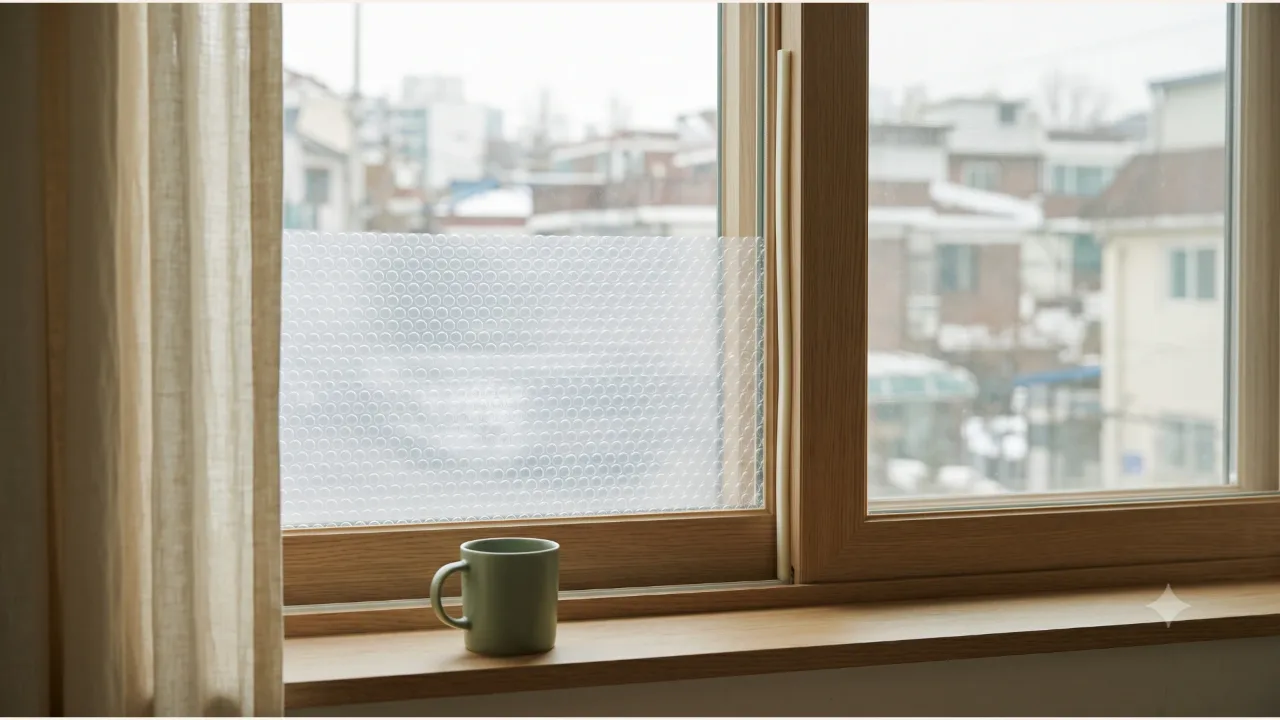
The Korea Energy Agency separates the methods: bubble wrap goes on the window surface and weatherstripping goes in the gaps. Once you decide which position to manage, it's easier to choose what you need.
How do you tell the glass surface from the gaps in the window?
The Korea Energy Agency's heating cost saving tips introduce putting bubble wrap on the window surface and using thick curtains. Weatherstripping is explained separately as something you apply to the gaps in a window.
Even for the same window, the positions are different. Before you buy, write down separately whether you're looking for something that covers the whole glass or something to put in the gaps where the sashes meet.
What do you base your choice of product on?
| Position to manage | Method the agency suggests | What to check before buying |
|---|---|---|
| Window glass surface | Attach bubble wrap | The surface the product says to attach to, and the glass size |
| Gaps in the window | Attach weatherstripping | The gaps the product is meant for, and how the window opens and closes |
| Space in front of the window | Use thick curtains | Room for the curtains, and how you move around the window |
This is based on the Korea Energy Agency's published guidance, checked on 2026-10-08. The page doesn't show a publication year. The last column is a list of items for finding the right product manual by use, not the agency's product certification standard.
Check each product's description for whether it can be attached to your glass type or window structure. The agency's material has no usage conditions by adhesive, film thickness, or glass type. Don't judge from a product name alone that it fits every window in your home.
How do the two weatherstripping candidates differ?
The candidates below are weatherstripping that goes in gaps, not bubble wrap that covers glass. First check the gaps in your window or door and how it opens and closes, then see whether you can attach it to the surface the product specifies.
| Candidate | Official listed dimensions | Use given in the official guidance | Check before attaching |
|---|---|---|---|
| 3M Scotch 2310 P-type | 5.6 x 8.7 mm, length 2.5 m, 2 pieces | P-type profile; absorbs impact noise from heavy entry doors and blocks drafts through gaps | Wipe the attachment surface clean, and check how the door opens and closes |
| 3M Scotch 2285 indoor medium | 9.5 x 13 mm, length 4.15 m | Blocks drafts through gaps around indoor doors and similar | Cut to the length you need, and wipe the attachment surface clean |
The 3M Korea 2310 official specs and 2285 official specs, checked on 2026-10-08. The dimensions are in the manufacturer's listed order and don't indicate the width of gap they can be applied to. The "24 per box" on the official page is a distribution packaging note, so don't read it as the quantity you get from a sales link. Check prices and what's in the box through the links, as of the check date.
To check whether your entry door needs a P-type profile, you can compare the 2310, and to check the length and attachment space for an indoor door, you can compare the 2285. If you want to cover the glass surface, neither product is a substitute for bubble wrap. Don't judge from a product-line description that includes glass windows that it fits every window structure; check the attachment surface and how it opens and closes.
How do you read the effect figures?
The agency's material groups several ways of managing heating heat that escapes through windows and the like under one item. You can't read that item's effect as the performance of one particular sheet of bubble wrap or one particular weatherstripping product.
Because the guidance has no product-by-product test results, you can't use indoor temperature rises or heating cost savings as numbers to compare products. Compare the position of use and the conditions of use first instead.
How do you also take care of ventilation?
In the same material, the agency advises opening windows to ventilate briefly and often in order to remove indoor moisture. After you attach insulation products, check that you can still open and close the windows you need.
The problem of droplets forming on a window is covered in the winter window condensation article, split into ventilation and insulation. This article focuses on choosing where to apply bubble wrap and weatherstripping.
What should you measure and note before you buy?
- Which position you want to manage, the glass surface or the gaps in the window
- The dimensions of the surface to attach to and the window structure
- The surfaces the manual says it can be applied to, and how to attach it
- Whether you can still open, close, and ventilate the window after attaching it
The sources were checked on October 8, 2026.
Product information
Candidates compared
-
3M Scotch 2310 P-Type Weatherstrip
-
3M Scotch 2285 Indoor Medium Weatherstrip
Check price and stock at the link. Product information is as of the date checked.
Frequently Asked Questions
Do bubble wrap and weatherstripping go in the same place?
The Korea Energy Agency separates them: bubble wrap goes on the window surface and weatherstripping goes in the gaps in the window. First check whether you want to manage the glass surface or the gaps.
Will the room definitely get warmer if I put them on?
The agency's material explains practical tips for reducing heat loss. It has no test results for individual products or by home conditions, so it can't be used as evidence that a specific product will raise the temperature.
If I put on insulation products, can I skip ventilating?
In the same material, the agency separately advises ventilation to remove indoor moisture. Managing heat loss and ventilation are items to check together.
Sources & Verification Date
- Guidance on managing window heat loss in heating cost saving tips (Korea Energy Agency) · Verified
- Scotch 2310 P-type weatherstripping official specifications (3M Korea) · Verified
- Scotch 2285 indoor medium weatherstripping official specifications (3M Korea) · Verified
All materials have been verified from official announcements and may have changed since verification.